

Éducaloi
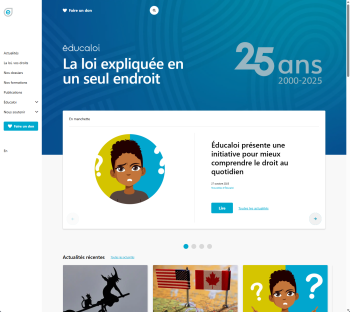
Éducaloi is an independent, non-profit organization founded in 2000, whose mission is to make the law accessible, easy to understand and easy to use in everyday life.
The organisation focuses on providing plain-language legal information, web-based guides, publications and educational resources covering topics such as families and couples, renting, work and employment, consumer rights, legal aid, health and obligations of citizens.
Key features include:
- A bilingual website (French primary, English version available) offering “The law by topic” across many domains.
- Educational outreach: ready-to-teach workshops for secondary school teachers, in-class legal workshops led by legal professionals, and pedagogical toolkits for educators.
- A “service-conseil” offering: customised support to institutions and stakeholders for simplifying legal content, creating accessible tools, training teams in clear legal communication and legal education.
- A strong emphasis on access to justice, neutrality, clarity and independence in its communication.
Strengths & usability
For newcomers, individuals, educators or community organisations in Québec, Éducaloi represents a substantial resource: the content is free, structured by legal domain, frequently updated with topical issues (e.g., online fraud, rights of tenants, legal aid eligibility) and crafted in a way that is accessible to people without legal training.
For MapleNow’s audience (Canadian newcomers or general public), inclusion of Éducaloi makes sense as it speaks to Québec-based legal information resources in both languages. The materials can help users unfamiliar with the Québec legal context to get an overview of rights and responsibilities, even though the site is Québec‐specific (civil law system, provincial statutes) rather than pan-Canadian in full.
Limitations & notes
- Éducaloi does not provide personalised legal advice or case‐specific guidance. Users with individual legal problems are referred to professional services.
- While there is a healthy amount of English content, the primary language remains French, and some resources/activities (especially educational workshops) may focus on francophone audiences or Québec context.
- Because the jurisdiction is Québec and the legal system is civil law (for provincial matters), users in other provinces should treat the content as contextual rather than automatically applicable in other provinces.


'%20fill='white'/%3e%3c/svg%3e)


