

Visit Canada - IRCC
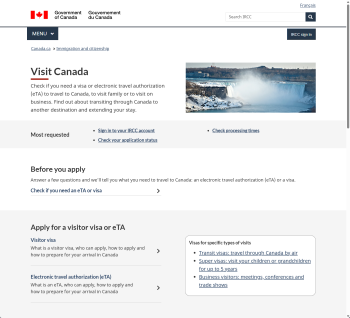
This official IRCC page outlines what foreigners must consider when planning to visit Canada: whether they need a visa or an electronic travel authorization (eTA), how to apply, what to bring at the border, business or transit visits, and how to extend a stay if necessary.
Eligibility and documents required
Visitors must determine first whether they need a visa or an eTA, depending on the travel document, nationality and route of arrival. They must meet entry-and-stay conditions: valid travel document (passport), in good health, no serious criminal or immigration-related record, sufficient funds for stay, and intention to leave at end of visit. Some travellers may require a letter of invitation, medical exam or police certificate.
Application process
Applications for a visitor visa or eTA are submitted online (except in specific paper-only cases). Applicants create an IRCC Portal account or use existing credentials; they answer preliminary questions to determine the correct form, upload supporting documents, pay fees and provide biometrics if required. Processing times vary by country, completeness of application and verification requirements.
Visitor status, length of stay and extensions
Most visitors can stay up to 6 months after entry. At the port of entry, the border officer may specify a shorter or longer departure date, and may issue a visitor record. For certain categories such as the “super visa” (parents or grandparents), special longer-duration rules apply. If you wish to stay longer, you must apply for an extension while your status is still valid.
Business, transit and other specific visits
The page also covers transit-through Canada (by air), business visitors (meetings, conferences, trade shows) and specific visas (transit, super visas). It explains that business visitors should have main income source outside Canada and not enter the Canadian labour market.
At-border and arrival considerations
Having a visa or eTA does not guarantee entry. At the border, officers check identity, travel documents, purpose of visit, funds, and other admissibility factors (health, security, criminality). Visitors should bring any invitation letters, lodging information and proof of funds especially if travelling with minors.
Practical tips
- Start the “Do you need a visa or eTA?” questionnaire early to avoid confusion.
- Collect and scan all required documents (passport photo page, travel history, funds) before beginning the application.
- Incomplete applications or missing biometrics can delay or lead to refusal.
- If travelling with children or minors, ensure guardianship or travel-authorization documents are in order.
- At the border, clearly articulate your travel purpose and planned length of stay—having credible ties to your home country is important.
Why this matters
Understanding the rules in advance reduces the risk of refusal, helps you budget for any fees or biometrics, and ensures you are prepared for entry at the Canadian border. This page is a reliable reference for tourists, business visitors, transit travellers and those seeking to extend their stay.


'%20fill='white'/%3e%3c/svg%3e)


