

Live in Canada permanently - IRCC
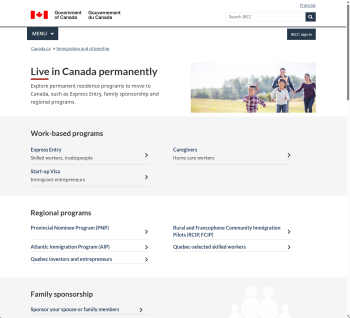
This IRCC page serves as the main entry point for individuals seeking to immigrate to Canada. It outlines the key permanent residence (PR) pathways, eligibility requirements, how to apply, and what to expect during the process. The programs span economic classes, family reunification, provincial/territorial nomination, humanitarian streams and special pilot initiatives.
Core immigration programs
The economic immigration category includes the Express Entry system for skilled workers, the Provincial Nominee Program (PNP), the start-up visa for entrepreneurs and the caregiver and skilled trades streams.
Family sponsorship allows Canadian citizens or permanent residents to sponsor spouses, partners, children or other eligible relatives. Humanitarian and refugee streams address protection needs or refugee resettlement.
Eligibility and the application process
Applicants must determine which stream fits their profile. For Express Entry, a profile is submitted, ranked via the Comprehensive Ranking System (CRS) and, if invited, you apply for PR.
Key eligibility factors include language proficiency, education, work experience, age, adaptability and where applicable a job offer or provincial nomination. Documents often required include passports, language test results, educational credential assessments, police certificates and proof of funds.
Processing times vary by stream and completeness of application. IRCC also provides tools to check estimated times and application status.
Provincial and territorial programs
Many provinces and territories participate via the PNP, offering nominations for those who meet labour market needs or have ties to a province. Steps generally include checking eligibility, applying to province/territory for nomination, updating your Express Entry profile (if applicable) and applying for PR.
Some regional or pilot programs target specific geographies such as rural or francophone communities, or combine work and settlement in a specific region.
Family, humanitarian and special-category programs
Family class sponsorship enables family reunification. Humanitarian and refugee programs offer protection to those in need. There are also special streams for certain groups (for example specific country situations, victims of flight incidents, etc.).
Practical tips and considerations
- Start by using the “Come to Canada” tool to identify which immigration stream may suit you.
- Prepare all required documents ahead of time: language tests, educational assessments, police certificates and proof of funds. Errors or missing items lead to delay or refusal.
- Keep your profile information current while you are in the pool (for Express Entry) and update any life changes (marriage, children, employment).
- Maintain admissibility: you must pass health, security and criminal-record checks and disclose all required information.
- If applying via a provincial program, know the province’s labour-market priorities and whether they require a job offer or ties to the region.
- Processing times fluctuate—plan finances accordingly if you must wait overseas or cannot begin employment immediately.
Why it matters
Immigrating to Canada represents a major life change and investment of time and resources. A clear understanding of available programs, eligibility criteria and process steps reduces risk of refusal and helps applicants plan realistically. As the official IRCC portal, this page is a reliable starting point for anyone assessing immigration to Canada.


'%20fill='white'/%3e%3c/svg%3e)


